





 17 min Read
 July 28, 2026
Most AML compliance teams are not struggling to find more alerts. They are struggling to figure out which alerts actually matter. Industry data shows that roughly 90% of AML compliance alerts are false positives. Analysts spend the majority of their day reviewing matches that go nowhere while real risks pile up at the back of the queue.
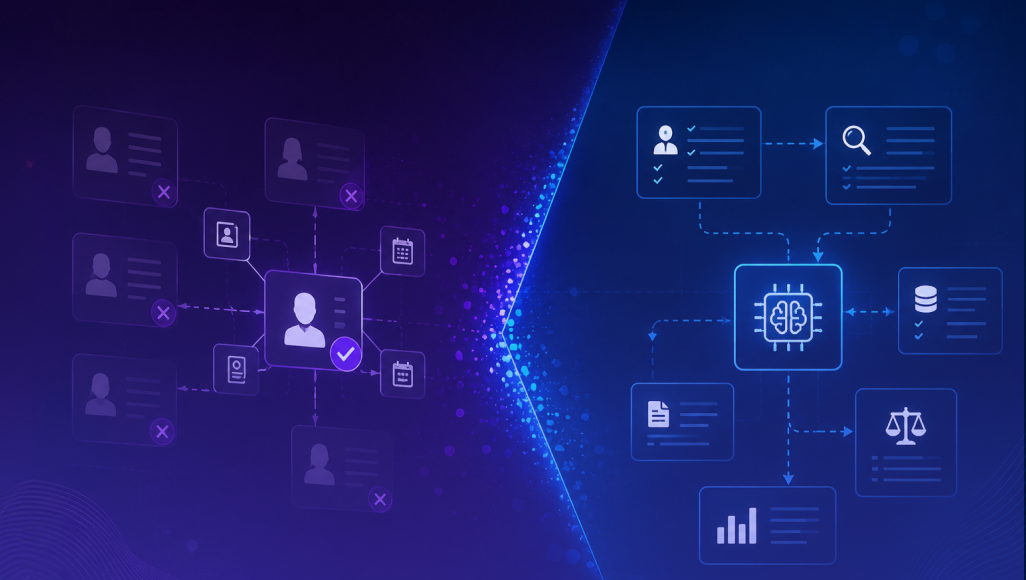
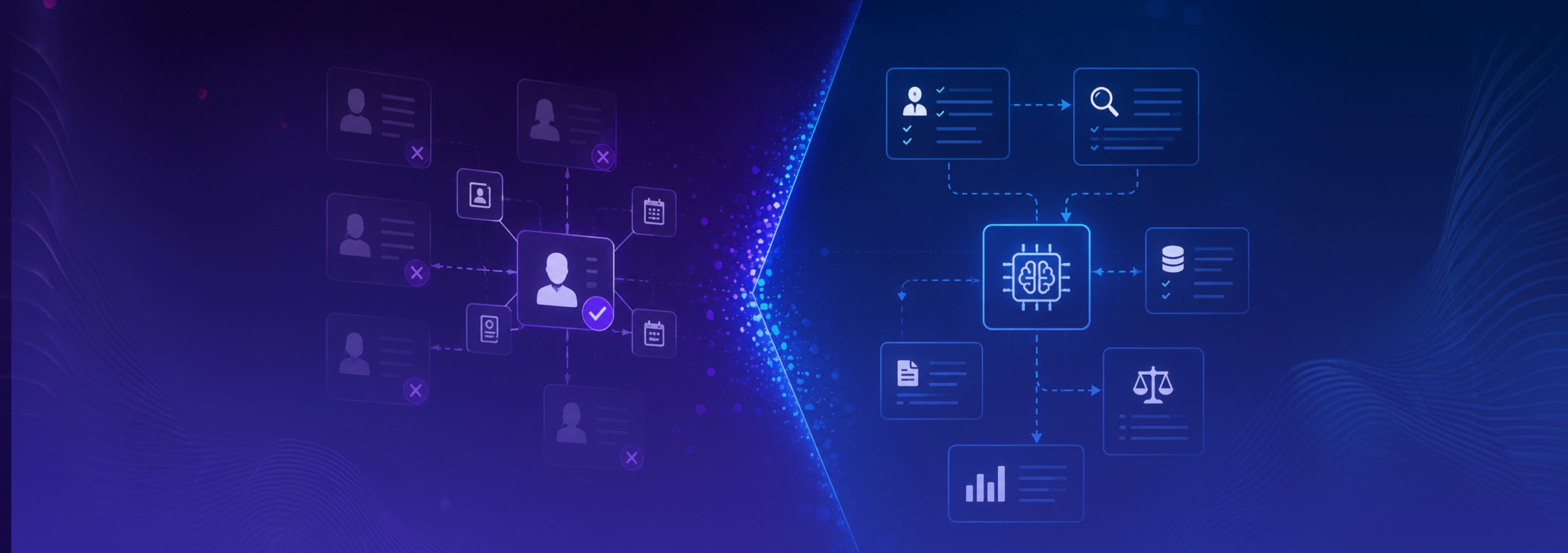
Agentic AI is entering this space with an approach that moves beyond alert generation and into automated investigation and decision support. Instead of generating more flags for humans to sort through, these systems take on investigation tasks themselves. Two platforms currently drawing attention are the Mesh AI Agent from
ComplyAdvantage’s Mesh and the TruRisk AI Agent from AML Watcher. Both automate alert investigations and reduce manual review workloads. However, they are built around different assumptions about where compliance teams experience the greatest operational pressure. This comparison breaks down what each agent actually does, helping compliance leaders determine which model best fits their situation.
Why AI Agents Are Becoming Essential for AML Compliance
Many compliance teams continue to face the same operational challenges despite years of investment in automation tools. Screening alert volumes remain high as customer onboarding grows, watchlists expand, and matching rules become more sophisticated. Regulatory expectations around investigation speed, documentation quality, and risk-based decision-making continue to increase. At the same time, analyst teams cannot realistically grow at the same pace as alert volumes.
The response from technology vendors has shifted in a meaningful way. Rule-based automation handled routing and thresholds. Workflow tools organize case management. Neither was designed to automate a substantial portion of the investigative work itself. Agentic AI in AML moves into that space. These systems do not just sort alerts into buckets. They collect context, assess risk signals, apply logic, and produce documented reasoning much like a trained analyst would.
According to ComplyAdvantage, 100% of surveyed firms expect positive outcomes from agentic or predictive AI in compliance, though adoption rates still lag behind expectations. Several financial institutions are already deploying agentic AI tools within active compliance operations rather than testing them in pilot programs. The question for any compliance team is which agent fits their actual operational challenge.
TruRisk vs Mesh at a Glance
Mesh AI Agent is ComplyAdvantage’s agentic module within the Mesh platform. Constructed progressively between 2024 and 2025, this initiative aimed to establish a comprehensive AI-powered compliance framework. The agent, known as Cassie, effectively harmonizes data sources and oversees risk assessment processes throughout customer screening, transaction monitoring, and ongoing monitoring workflows. ComplyAdvantage describes Mesh as a digital compliance workforce that operates across the full AML compliance lifecycle.
TruRisk AI Agent is AML Watcher’s screening intelligence layer launched in December 2025. It is designed specifically to address the alert overload that plagues name-matching-based screening. TruRisk brings contextual risk analysis into the screening stage so compliance teams spend less time on obvious non-matches and more time on genuine exposure.
One platform targets broad compliance operations at scale, as the other targets screening alert precision.
| Dimension | Mesh AI Agent (ComplyAdvantage) | TruRisk AI Agent (AML Watcher) |
| False positive reduction | 70% fewer FP alerts reaching analysts | 95% reduction in false positives |
| Analyst workload impact | 7x more work handled with the same headcount | 70–80% less manual review work |
| Investigation speed | Up to 84% faster investigations | 90% faster processing |
| Automation depth | Up to 95% of KYC, AML, and sanctions reviews | The L1-L2 analyst function is effectively automated |
| Onboarding impact | 50% faster onboarding | Faster onboarding through earlier alert resolution |
What Compliance Problem Does Each AI Agent Solve?
TruRisk Focuses on Screening Alert Fatigue
TruRisk addresses one of the most persistent inefficiencies in AML compliance, which is the volume of screening alerts that require analyst review before a risk decision can be made. Traditional name-matching systems often generate alerts based on partial name similarities, forcing analysts to spend valuable time determining whether a match is genuinely connected to the screened individual or entity.
Rather than simply reducing alert volumes, TruRisk automates the screening investigation process itself. At the first level of review, it eliminates noise by identifying whether a match is likely to be a true positive or a false positive using contextual identifiers such as date of birth, nationality, location, and entity relationships. Second, it revalidates the identity of the matched individual or organization against available data points before assessing sanctions exposures, PEP associations, adverse media records, and other AML risk indicators.
The result is a fully contextualized risk assessment supported by documented evidence and reasoning. Instead of manually gathering and validating information across multiple sources, compliance teams receive an investigation-ready judgment, enabling reporting officers and analysts to make decisions faster and with greater confidence.
AML Watcher reports that TruRisk reduces manual screening review work by 70-80% while cutting analyst fatigue associated with screening investigations by up to 95%.
| Area | ComplyAdvantage Mesh | AML Watcher TruRisk |
| Primary objective | Automate compliance workflows across AML operations | Automate screening investigations and reduce false positives |
| Main bottleneck addressed | Investigation of backlogs and operational scale | Screening alert overload |
| Focus area | KYC, TM, screening, remediation | Sanctions, PEP, adverse media screening |
| Ideal user | Large institutions managing multiple compliance functions | Teams are overwhelmed by screening alerts |
| Value delivered | Operational efficiency | Screening precision and analyst productivity |
Mesh Focuses on Compliance Operations at Scale
Large banks and payment providers often face operational challenges that extend beyond sanctions and watchlist screening. Investigation backlogs, transaction monitoring queues, and growing case volumes often put compliance teams under operational pressure.
Mesh addresses this challenge by automating workflows across multiple compliance functions. The platform reviews alerts, gathers customer and transaction information, applies institution-specific policies, and either resolves or escalates cases with documented reasoning. According to ComplyAdvantage, Mesh can process a large share of compliance reviews automatically, allowing institutions to increase throughput without expanding analyst teams at the same pace.
How TruRisk and Mesh Approach AI Decision Making
TruRisk Uses Context-Based Alert Investigation
TruRisk operates more like a specialist investigator focused on screening accuracy. The focus is on the first and most congested stage of the compliance process: the initial alert review. This stage integrates sanctions intelligence, Politically Exposed Person data, adverse media signals, and watchlist match context to assess each result. By using distinct identifiers that go beyond mere name similarities, it generates a well-reasoned decision on whether an alert should be escalated.
| Capability | Mesh | TruRisk |
| Investigates screening alerts | ✓ | ✓ |
| Uses contextual identifiers | Limited information is publicly available | ✓ DOB, nationality, location, entity links |
| Screens sanctions exposure | ✓ | ✓ |
| Screens PEP exposure | ✓ | ✓ |
| Screens adverse media | ✓ | ✓ |
| Produces an explainable rationale | ✓ | ✓ |
| Automates L1 review | ✓ | ✓ |
| Automates L2 investigation support | Partial | ✓ |
Mesh Uses Multi-Step Workflow Automation
Mesh functions like a compliance operations engine. When the system receives an alert, the agent examines the available evidence and cross-references it against the organization’s specific policies. They then decide whether to resolve the case or escalate it, and provide clear documentation of their reasoning. This process effectively encompasses customer screening, ongoing monitoring, transaction oversight, and remediation within a unified environment.
TruRisk vs Mesh for False Positive Reduction
Traditional fuzzy name-matching produces large alert volumes because similar names are extremely common across global populations. Analysts often spend substantial time documenting why individuals with commonly occurring names do not match sanctioned entities. Across hundreds of alerts, this effort can consume a large share of compliance resources.
| Metric | Mesh AI Agent | TruRisk AI Agent |
| False positives reaching analysts | Up to 70% reduction | Up to 95% reduction |
| Manual screening review effort | Reduced through workflow automation | 70–80% reduction |
| Investigation speed | Up to 84% faster investigations | Up to 90% faster processing |
| Analyst fatigue | Not publicly disclosed | Up to 95% reduction |
The comparison requires some context because the two vendors report different performance metrics. Mesh primarily measures the reduction in alerts that require analyst review through workflow automation and remediation. TruRisk reports outcomes at the screening investigation layer, where contextual intelligence is used to validate matches before they reach compliance teams. As a result, the figures are not directly equivalent.
Data Availability and Risk Intelligence
While both platforms support core AML screening functions, their approaches to risk intelligence differ. Mesh integrates screening within a broader compliance automation framework, but public information provides limited detail on how contextual risk factors are applied during match evaluation.
| Intelligence Source | Mesh | TruRisk |
| Sanctions screening | ✓ | ✓ |
| PEP screening | ✓ | ✓ |
| Adverse media screening | ✓ | ✓ |
| Contextual risk intelligence | Limited public disclosure | ✓ |
| Match validation before escalation | ✓ | ✓ |
| Risk-based screening decisions | ✓ | ✓ |
TruRisk places greater emphasis on contextual screening intelligence during match evaluation. Publicly available information indicates that it incorporates identity validation and additional risk indicators to support risk-based escalation decisions.
Explainable AI and Regulatory Defensibility
Regulators following the FATF’s risk-based approach need to ensure that compliance decisions are well-documented and justifiable. If a tool reduces false positives but fails to explain how it arrived at its conclusions, it creates challenges for the auditing process.
Mesh includes full audit trails and workflow transparency built into its case management environment. Decisions made by the AI agent are traceable with the reasoning documented at each outcome. This supports model governance expectations and regulatory review.
TruRisk makes explainability a core design principle. Every verdict includes the specific factors that drove it. Sanctions screening decisions reference the unique identifiers used. For adverse media matches, the system documents which risk indicators were identified and why they were considered insufficient for escalation. AML Watcher built this approach specifically for FATF framework regulators who require risk-based decisions to be recorded consistently.
The future of agentic AML compliance will depend as much on this capability as on accuracy. Without explainability, an AI agent may struggle to satisfy regulatory expectations around auditability and governance.
Which AML Teams Benefit Most from Mesh and Which Benefit Most from TruRisk?
Organizations That May Prefer Mesh
Mesh is positioned for institutions where the compliance operations problem spans multiple workflows. Large banks with complex investigation backlogs, payment providers managing billions of transactions, and firms running combined AML, sanctions, and fraud programs are the natural fit. If the bottleneck is compliance operations at scale, Mesh addresses that directly.
Organizations That May Prefer TruRisk
TruRisk is built for teams that spend their days screening alert volume. Digital banks running high-volume customer onboarding, fintech compliance programs dealing with PEP and sanctions clutter, and MLROs managing stretched analyst teams with limited headcount are likely to see the sharpest improvement. TruRisk’s precision at the screening stage makes it most effective when name-matching generates the most friction.
Best Fit by Institution Type
| Organization Type | Mesh | TruRisk |
| Global bank | Good fit | Strong fit |
| Regional bank | Good fit | Strong fit |
| Fintech | Moderate fit | Strong fit |
| Digital bank | Moderate fit | Strong fit |
| Payment processor | Strong fit | Strong fit |
| Crypto business | Good fit | Strong fit |
| Small compliance team | Moderate fit | Strong fit |
Use case maturity and where operational friction actually sits matter more than vendor size. An institution with a solid investigation workflow but a broken screening stage does not need a full compliance operations engine.
Why Compliance Teams May Choose TruRisk Over Mesh
Compared with publicly available performance data, TruRisk reports higher screening-specific efficiency gains, including up to a 95% reduction in false positives reaching analysts, a 15% reduction in false negatives, and up to 90% faster screening investigations. AML Watcher also reports a 70–80% reduction in manual review effort, helping compliance teams allocate resources toward higher-risk cases.
TruRisk also provides documented decision rationale that supports auditability and analyst review. For institutions struggling with screening alert fatigue, onboarding bottlenecks, or limited analyst capacity, it may offer a stronger fit than broader workflow automation platforms.
Stay Informed on AML Technology Decisions
TruRisk and Mesh take different approaches to AML automation, with each addressing a different operational challenge.
The right choice depends on which compliance process creates the greatest operational burden for the institution. Aligning technology with that bottleneck is often more important than comparing feature lists alone.
As AML technology evolves, distinguishing between platform capabilities becomes more difficult when relying solely on vendor marketing materials. The KYC AML Guide equips compliance professionals with clear and practical comparisons along with expert insights. Dive into additional guides to make more informed decisions about the tools that are most essential to your work.
Share


Table of Contents
- Why AI Agents Are Becoming Essential for AML Compliance
- TruRisk vs Mesh at a Glance
- What Compliance Problem Does Each AI Agent Solve?
- How TruRisk and Mesh Approach AI Decision Making
- TruRisk vs Mesh for False Positive Reduction
- Data Availability and Risk Intelligence
- Explainable AI and Regulatory Defensibility
- Which AML Teams Benefit Most from Mesh and Which Benefit Most from TruRisk?
- Why Compliance Teams May Choose TruRisk Over Mesh
- Stay Informed on AML Technology Decisions